
By Craig Coley
Photography by Martin Boling
Dementia is an umbrella term describing a cluster of symptoms caused by damage to the brain. These symptoms include memory loss, disorientation, confusion, and thinking problems. Of the diseases that cause dementia, Alzheimer’s is the most prevalent among people older than 65. Other diseases that cause dementia include cerebrovascular disease, frontotemporal degeneration, Parkinson’s disease, Lewy body disease, hippocampal sclerosis, and Wernicke-Korsakoff syndrome. “You can think of de-mentia as a last name,” says Eric Knabel, a family practice physician at IU Health in Bloomington. “You have Alzheimer’s dementia, Lewy-body dementia, and so on.” Because Alzheimer’s is so well known, Knabel says, people often use “Alzheimer’s” when speaking about dementia the way they use “Kleenex” as a term for facial tissues.
What dementias have in common is that they all involve slow degeneration of cognitive functioning, though severity of symptoms will vary from day to day and even moment to moment. Periods of dis-orientation and confusion often create panic. This spurs fight-or-flight responses: lashing out in anger or walking off—often referred to as “wandering.” When people forget where they put things, they may think that someone is stealing from them and begin to treat loved ones with suspicion. Some people hal-lucinate. With progress of the disorder, people lose not just whatbut also how. Hands forget how to put on clothes, legs forget how to walk, mouths forget how to speak and eat.
Dementia is a uniquely distressing illness as it disrupts core elements of personhood—our memories, our judgment, and even our personality. Among family members and friends, it can produce feelings such as anger and embarrassment that are less common in illnesses like cancer. Thus, despite its prevalence—between 5% and 8% of people who live longer than 60 will develop a form of it—dementia is often hidden from sight and cloaked with shame and stigma. “It’s in the closet,” says Jerry Gonyo, whose wife, Darlene, died with dementia in 2019.
“Some people are very uncomfortable around the disease,” says Wendy Rubin, whose husband, Richard “Dick” Rubin, died with Alzheimer’s disease in 2013. Dick was a semi-retired professor at Indiana University when he developed dementia, and “he was quite sociable,” Rubin says. “I remember going to dinner with a group of people, and they just didn’t quite know how to respond to him. He was a different person than they knew. And they fell away. They didn’t intend to hurt either one of us. They were uncomfortable, and I understand that.”
Michael Verde is president of a Bloomington-based non-profit called Memory Bridge that advocates for client-centered care for people with dementia. Verde coaches professional and non-professional caregivers to cross what he calls the “valley of awkward” and connect with people who have dementia. “There’s nothing about cognitive impairment that impairs our need to feel understood,” Verde says. “Most people think that if you lose enough neurons, you disappear. I’m suggesting, no, you disappear when the people that look at you like they love you disappear. Our identity is not in our neurons. Our identity is in relationship.”

Jerry Gonyo with a photo of his late wife, Darlene, who died with dementia in 2019. “It’s in the closet,” says Gonyo about dementia.
You can slow it, but not stop it
Dementia is no more prevalent today than in the past. Study results vary, but they indicate a decline in dementia rates over the past 50 years in the United States. This positive trend is attributed to generally higher levels of education and better cardiovascular health in the population. There is still no cure for dementia, but some treatments have succeeded in slowing progress of the disease in its early stages. Early identification can make a critical difference, and recent advances have made the disease easier to detect. Research has also demonstrated ways that lifestyle can protect people from developing the disease and also slow its progress.
“The most challenging part for me is knowing that ultimately there’s nothing you’re going to be able to do about it,” Knabel says. “You can slow the progression, but you can’t stall it forever. It’s frustrating seeing the toll it takes on family members and know that there comes a point where you’re very limited in what you can offer in terms of help. It becomes about supporting families at some point.”
Emotional challenge of care giving
Caregivers often experience isolation as they devote themselves to caring for—and monitoring—the person with dementia. Some people with the disease become gentle and sweet, others suspicious and aggressive; some fight for independence while others become extremely reliant on others. A best-selling guide for caregivers, now in its seventh edition, conveys the sometimes-overwhelming demands of the role in its title, The 36-Hour Dayby Nancy L. Mace and Peter V. Rabins (John Hopkins University Press, 2017).
The emotional challenge adds further strain. Loved ones often struggle with a sense that the person with dementia is disappearing or has become a shell of themselves. Lynn Casteel Harper laments this “tragedy narrative” and says that it relegates people with dementia to less-than-human status—with real costs. The author of On Vanishing: Mortality, Dementia, and What it Means to Disappear(Catapult, 2021), Harper wrote in a June 14, 2025 essay in The New York Times: “The notion that people are gone before they are dead directly harms the care they receive, exactly when they need it most.”
Reader responses to Harper’s essay reveal the diversity of experiences with dementia. Some letters to the editor praised Harper’s piece for highlighting that dementia can open surprising new possibilities for relationship. Many others felt that Harper was shaming them because they experienced only heartbreak over the gradual loss of their loved ones.
While responses to dementia are personal, they need not be solitary. To pick up Gonyo’s phrase, if dementia is often “in the closet,” support services may remain similarly out of sight. But Bloomington, which in 2017 became the first city in Indiana to be rated a “dementia-friendly community,” has a number of resources, including support and advocacy groups. “You may not know it’s happening, but it’s happening all over Bloomington,” says Amanda Oporta, a founder of the support and advocacy group Dementia Friendly Bloomington.
Risk factors
Age is the biggest risk factor for dementia. According to 2025 Alzheimer’s Disease Facts and Figures, a special report published by the Alzheimer’s Association, Alzheimers is the most prevalent dementia-causing disease, it is found in:
- 5% of people ages 65–74
- 13% of people ages 75–84
- 33% of people 85 and older
Genes also play a role. At least 75 genetic variants are associated with increased risk for Alzheimer’s disease, according to the Alzheimer’s Association report. Having a parent or sibling who has had Alzheimer’s disease places a person at higher risk of developing the disease.
Research continues to find links between lifestyle and dementia risk. The brain is one of the body’s organs and becomes vulnerable to disease under the same kinds of stresses that affect other organs. These include high blood pressure, poor sleep, poor diet, isolation, inactivity, and smoking.
Knabel says that sleep apnea is an under-recognized risk factor for dementia. “I know people don’t like to sleep with machines on,” Knabel says. “But it’s been shown that sleep apnea can really accelerate the process of decline.”
Untreated hearing loss can also play an insidious role in social isolation and increase a person’s risk of dementia. “If you can’t hear the conversations that are going on around you,” Knabel says, “you tend to shut down.”
Protective factors
Conversely, healthy behaviors protect against dementia. “Lifestyle is the number one way to reduce your chances of developing dementia,” Oporta says. “We have meds and everything out there, but lifestyle is the only thing that has proven to really protect your brain.”
Research documents assembled by the National Library of Medicine, show a correlation between the so-called MIND diet and a lower risk of dementia—between 10% and 53% lower, depending on the study and participants’ adherence to the diet. The MIND diet is similar to the Mediterranean diet but specifies a daily, one-cup serving of green, leafy vegetables such as spinach, kale, collard greens, and chard. Like the Mediterranean diet, the MIND diet emphasizes whole grains, olive oil, nuts, berries, fish, and poultry, and it strictly limits fried food, red meat, butter, sweets, and cheese.
In addition to diet and exercise, research shows that dementia risk is reduced by social engagement—volunteering, joining a club, gathering with friends and family—and by mental activities like reading, taking a class, learning a new skill, and playing games. “We have an adage in medicine: If you don’t use it, you lose it,” Knabel says. “Too many people retire and they don’t keep their minds active. Maybe they don’t try any new hobbies. My elderly patients that are doing the best are generally the most active. They’re still visiting with their friends. They’re going for walks at the YMCA. They keep a much healthier lifestyle. That does make a difference.”
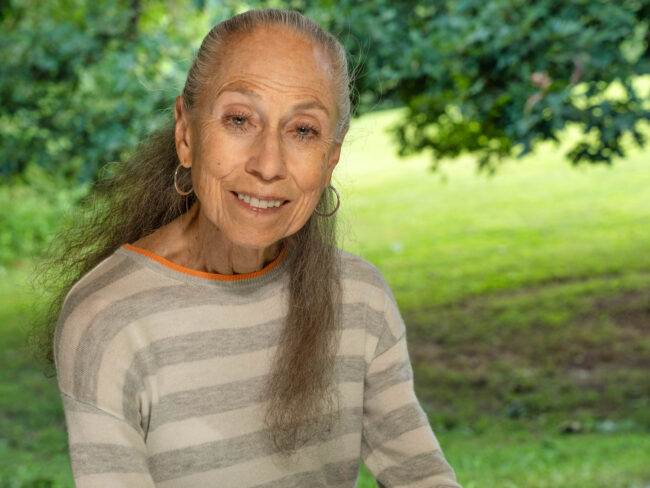
“Some people are very uncomfortable around the disease,” says Wendy Rubin, whose husband, Richard “Dick” Rubin, died with Alzheimer’s disease in 2013.
Is it dementia?
Not all dementia symptoms are caused by progressive brain changes. It is important to consider whether symptoms may be caused by a reversible condition such as delirium, side effects of medications, thyroid problems, vitamin deficiencies, brain tumors, depression, stress, untreated sleep apnea, Lyme disease, head injury, or excessive alcohol consumption. Knabel says that delirium can result from something as seemingly unrelated as a bladder infection, sleep problems, or blood oxygen deficiency.
While delirium comes on quickly, dementia develops gradually. Though many people retain strong memories throughout life, cognitive decline is a normal part of aging for many others. About 40% of people experience some form of memory loss beginning at age 65; only about 20% of them develop dementia. It can be helpful to distinguish age-associated memory loss from a more serious condition called mild cognitive impairment, which is less severe than dementia but comes with a greater risk of developing it.
“A certain amount of cognitive slippage, especially during times of stress and pressure, is to be expected,” Knabel says. “So many people are under so much stress now, whether they’re taking care of family members, have job situations, or just general angst about the political climate in this country right now. The trick is deciding, well, when do we start investigating this further.”
With age-associated memory impairment, you may forget a person’s name or where you left your keys. You sometimes struggle to find the word you want to use. These lapses in memory do not significantly disrupt your daily life, and while they may bother you, people close to you are not worried. You are still able to learn and remember new things.
Mild cognitive impairment is a condition affecting memory, language, thinking, and judgment beyond the cognitive changes of normal aging. Physical and cognitive tests can diagnose this condition. Typical signs of mild cognitive impairment include:
- Memory loss that usually does not interfere with independence in daily living
- Impaired thinking skills that may complicate such things as paying bills
- Difficulty with language
- Disorientation in time and space
- Impaired depth perception that might make driving difficult
- Poor judgment
The impairment that accompanies dementia is more significant than in mild cognitive impairment. A formal diagnosis requires professional evaluation, but here are 10 warning signs:
- Memory changes that affect daily living
- Difficulty completing familiar tasks like cooking or getting dressed
- Forgetting simple words or substituting odd words
- Getting lost in familiar places
- Impaired judgment, such as wearing heavy clothing on a hot day
- Difficulty with abstract thinking
- Placing things inappropriately, like putting a remote-control device in the refrigerator
- Changes in behavior, mood, and personality
- Loss of initiative
- Difficulty navigating a room
Getting lost while driving familiar routes is a common early indicator. Gonyo recalls times his wife called him from the car saying she didn’t know where she was. “I said, ‘Well, what do you see?’ She said, ‘I see a Walmart.’ I said, ‘Okay, put the phone down and leave it on. We’ll get you home.’” After the third time this happened, Darlene decided to stop driving and gave away her car.
Not everyone is as willing as Darlene to accept limitations on their lifestyle. Some try to hide their symptoms; others are oblivious of them. Bloomington resident Steve Taylor, 68, was working at a bank when he developed dementia 10 years ago. “My supervisor would be eavesdropping on my cubicle and come over and say, ‘You can’t do that.’ I’d say, ‘Do what?’ She’d tell me what I’d done, and I’d say, ‘I never do that.’ She’d say, ‘You just did.’ The next day the same thing would happen, and she’d say, ‘We just talked about this.’”
If you are concerned that someone may have dementia, you can consider the 10 warning signs. Keep track of changes in the person’s behavior. Ask the person to have a complete medical check-up, and volunteer to go with them. Ask for a Medicare Annual Wellness exam if they are on Medicare, as this includes a screening for cognitive impairment. It can be helpful to have a second person present during evaluations, both for support and for recollection of what was said.
Early detection and diagnosis
Early detection of dementia can dramatically affect its course, since many medications that slow its progression are only effective in its earliest stages. Dementia is often divided into early-stage, mid-stage, and late-stage. For Alzheimer’s disease, clinicians also use biomarkers to distinguish seven stages.
Knabel says that as a family practice physician, “a lot of times I’m going to be the first line of defense.” He said that he relies on patients and others who accompany them on check-ups to raise concerns about cognitive changes. “If you have mild to moderate cognitive decline, you can probably hold it together for the 15 minutes we’re together,” Knabel says. “We don’t have a formal screening program for our patients above 65 and we probably should when you think about the fact that Alzheimer’s risk doubles every five years after the age of 65.”
When a concern is raised, Knabel administers a standardized mental status exam—a brief screening that assesses attention, short-term memory, orientation in place and time, language skills, and ability to understand and follow instructions. The exam Knabel uses is scored on a 30-point scale. “I’ve seen people that I wouldn’t have any suspicions about, and I do a mental status examination and they score six out of 30,” Knabel says. A screening is not intended to diagnose; for that, Knabel refers patients to a neurologist. Oporta, with Dementia Friendly Bloomington, says that getting to see that specialist might mean a wait of six months, with further waits for subsequent referrals such as for a brain scan or specialized lab tests.
Initial screenings for dementia are also offered at IU Health’s Alzheimer’s and Dementia Resource Service in Bloomington and at the Area 10 Agency on Aging in Ellettsville. An at-home screening called the Self-Administered Gerocognitive Exam, or SAGE, can be found online and completed in 10–15 minutes, but it cannot be scored by a lay person—it is intended to be brought to a physician for evaluation.
The process of formally diagnosing a dementia can take months or even years. Often the presence of some form of dementia is determined early in the process but identifying the specific disease responsible for it requires coordination among several specialists who perform physical and neurological exams, as well as laboratory tests and a brain scan.
‘Huge breakthrough’ in early detection
Many diseases that cause dementia, including Alzheimer’s, involve build-up of abnormal proteins in the brain. Until recently, detecting these proteins—or their absence, which points to different dementia-causing diseases—required a brain scan, which is an expensive procedure. In 2022, a procedure was approved to measure these proteins in the cerebrospinal fluid by taking a sample through a lumbar puncture, commonly called a spinal tap.
This May, the FDA approved a new process for detecting biomarkers of Alzheimer’s disease through a blood test. Based on discoveries made by Jeffrey Dage, professor of neurologyat the Indiana University School of Medicine in Indianapolis, the test is more than 90% accurate and is approved for people who exhibit signs of dementia who are older than 54. While it only detects the presence of Alzheimer’s proteins, Oporta says “it is a huge breakthrough. If you have any of those biomarkers within your bloodwork, then you can get started on medications earlier. And these medications have shown to really slow the process down. And in some cases, people have been able to stay in mild cognitive impairment and never advance beyond that, which is amazing.”
In addition, Oporta has been lobbying legislators to require insurance companies to cover brain scans for people at age 50. If the first brain scan a person has is when they are being evaluated for dementia at, say, age 65, this snapshot provides no information about how the brain may be changing. Oporta says that regular brain scans could vastly improve screening for dementias, get effective treatments started sooner, and save lives.
Though Oporta says that the pace of change is slow, it has been increasing in the six years that she has been advocating at the policy level. In this regard, dementia’s prevalence is an asset. “I’ve not once heard somebody in a decision-making position tell me they don’t know anybody with dementia. They all know someone, and for many of them it’s their parents or their own spouse. So, I think that’s what’s helped move things. We’ve had such rapid movement toward putting more into dementia—more than ever before in history.”

Amanda Oporta, a founder of the support and advocacy group Dementia Friendly Bloomington, says that in the six years she’s been advocating for dementia at the policy level, she’s seen a rapid movement toward putting more resources into it.
Support
When Steve Taylor received his dementia diagnosis in 2017, he said it was like “a cold bucket of water” dumped on his head. “You know what dementia means. And you go in thinking maybe it’s something like that. But what you’re really thinking is that, ‘I bet I have a tumor or something that they can fix.’ You’re wanting to think that it’s repairable, whatever it is. And then when they say, ‘This is what you have, and it is not repairable. It is a terminal diagnosis, and it means that you’re pretty much not going to be working anymore,’—it’s a real shock.”
Joy Harter is an elder care specialist and mental health counselor who supports people with dementia and their caregivers. She often meets people soon after dementia has been detected, their minds racing with “what ifs?” She normalizes this response and counsels people to take things one day at a time. “You want to remain as calm as you can and take the moments as they come and not get so far ahead that you’re catastrophizing what’s going to be the worst thing,” Harter says. “Recognize that there can be quality of life for someone who is living with dementia and for yourself as well.”
Treatment of illnesses that cause dementia involves a number of specialists. These can include a neurologist, a neuropsychologist, geriatrician, social worker, and occupational therapist. Ideally, one physician coordinates referrals and reviews test results. “As a primary care physician, I see myself as the quarterback of the team and the point person for any specialty referrals,” Knabel says. “I oversee all these things and make sure the patient is getting what they need at all times.”
The most vital supports are often outside the doctor’s office. Bloomington is rich in community programs for people living with dementia, and also their caregivers. Dementia Friendly Indiana publishes a detailed but easy-to-read Dementia Road Map to help people navigate dementia; it can be found on the group’s website. The Area 10 Agency on Aging website lists local resources including:
- Elder care managers, who consult with individuals and families to plan for present and future care
- Elder law attorneys, who can help create the legal documents that allow a person with dementia to empower others to act on their behalf when they are no longer considered mentally capable
- Living facilities that specialize in caring for people with dementia.
Dementia Friendly Bloomington trains businesses and organizations to make their spaces easier for people with dementia to navigate. More than 50 business and public places have been designated dementia friendly. A list can be found at the Area 10 Agency on Aging website (see Page 102.)
Peer support groups can be a lifeline for people with dementia and their caregivers. IU Health’s Alzheimer and Dementia Resource Service facilitates several groups each week, providing fellowship, activities, encouragement, and wisdom learned from experience. People who participate in these groups describe the relief of connecting with people who understand.
Taylor got active in support groups soon after he developed dementia and found that the camaraderie counterbalanced the devastation he felt after being diagnosed. Now his goal is to inspire others. “You can decide to have a full life living with dementia,” Taylor says.
Oporta says that Taylor’s experience is common. “People who are involved in these groups often say, ‘If this would not have existed for me, I would already be dead because I would not have had purpose, I would not have known how to connect with others.’ We hear that all the time.”
For a person living alone with dementia, Harter stresses the importance of having someone who visits them regularly to evaluate how they are doing and whether they need more support than they are getting. “You can’t rely on what you hear by talking to someone over the phone,” Harter says. “It’s not that there’s any intentional deceit, but you can’t necessarily know if they’re taking their medicines correctly without looking at the medicine box.”
People who wander may be eligible to participate in Monroe County Project Lifesaver, a non-profit program that outfits people with transmitter bracelets which allow police and fire responders to quickly locate them. Run by the Monroe Fire Protection District, the system makes use of radio frequencies, which are more reliable and precise than cellular systems. “It’s one of the best-kept secrets in town,” Lt. Paul Ford says of Project Lifesaver. An application can be found at monroefd.org.
Caring for a person with dementia
Dementia alters family relationships and patterns. A family member may find it necessary to stay home to care for the person with dementia, which might involve loss of income or less time for other activities. Family members may disagree about how best to care for a person with dementia. An adult child living nearby might be pressed to do more than others living at a distance. Family members might have different perspectives on the financial costs of various forms of care. The money needed to pay for care may come from money saved for retirement or a child’s college education.
In 2024, according to the Alzheimer’s Association, 219,000 people in Indiana reported spending 325 million hours caring for a family member or friend with dementia. This amounts to about 28 hours a week on average. About 60% of dementia caregivers nationwide identify as women, more than a third of them daughters caring for a parent. About a quarter are also caring for at least one child.
Among people ages 50–80 who care for family or friends with dementia, a national survey found that 42% do so on a full-time basis, for an average of nine hours a day. About a quarter reported that they could not safely leave the person with dementia alone for more than an hour. One third were living with the person with dementia. Sixty percent were caring for a parent, 20% for a spouse, and 20% for a relative or friend. Most received help from other family members, and about a third paid professional caregivers for assistance; only 10% reported being the sole caregiver.
“I always emphasize that you’re stronger when you ask for help,” Harter says. “You can be a stronger caregiver and have a more balanced life if you recognize that you shouldn’t do it by yourself.”
Having friends who continue to engage socially helps the person with dementia as well as the people who care for them. Gonyo’s wife was active in book clubs and with a group of friends who played canasta together. “When she stopped driving, her friends would come and pick her up and take her out,” Gonyo says. Rubin’s husband was a marathon runner. After he could no longer run, his running buddy became a walking buddy.
People caring for someone with dementia are at least 30% more likely to report symptoms of anxiety and depression. At the same time, the national survey of dementia caregivers older than 50 found that 85% said they found caregiving rewarding. Research has found that people who are able to find positive aspects of caregiving report fewer mental health problems.
“Caring for someone with dementia requires patience and an emotional shift,” Rubin says. “You cannot be angry at their limitations. That’s not to say that I didn’t feel impatience or sometimes annoyance, but you have to catch yourself and realize that they are not doing it to taunt you or to be a bad person. It is a disease, not the person.”
When dementia changes relationships, Oporta says, the changes in the behavior of the person with dementia explain only part of the shift—the other part is the way other people alter their perception of that person. “You look at them as less than they were before because dementia has a huge stigma connected to it,” Oporta says. “But they’re still that person. They’re just changing a little bit at a time. But you are also changing if you view them as something different than the human that they were before.”
Gonyo remembers times after his wife moved to a memory care facility when he would visit her, and they would be talking, and she would abruptly say, “‘You better leave now before my husband comes.’ So I would walk out, wait 10 minutes, come back in, and she would say, ‘Oh, there you are.’ So you go through that, accept that.”
In caregiver support groups, members encourage each other to prioritize their own care. “If they don’t, they decline,” Rubin says. “And in a few instances, the care partner actually passes before the person living with dementia. Sometimes it is just so debilitating, emotionally, and physically.”
“We learn from each other,” Gonyo says. Sometimes the wisdom is instrumental—such as how to hire a caregiver for a few hours a week—and other times it is interpersonal. Rubin says, “If you pose a question, do not say to the person living with dementia, ‘Do you remember such and such?’ Because in most instances, they don’t remember. You have to phrase things differently. Or if they ask to do something that is a little weird or ridiculous, you can make something up and say, ‘You know what? That’s a good idea. I’ll think about that.’”
“All this you learn slowly as you’re living the journey,” Rubin says. “It’s not anything that you’re equipped with to start. Every situation is different. Every single case is different. Every person living with a disease journeys differently. Therefore, their caregiver has to journey differently as well.”

Joy Harter, an elder care specialist and mental health counselor who supports people with dementia and their caregivers, says, “Recognize that there can be quality of life for someone who is living with dementia and for yourself as well.”
Memory care facilities
When living at home becomes too difficult or dangerous, people with dementia often move to a facility designed to care for them. Today these are called memory care units or facilities, and Monroe County has about a dozen of them. They compete for clients, and it is not difficult to find a room. At Jill’s House, for example, the process of getting in can be as short as a day or two, says Director of Nursing Robin Meadows. Some, like Jill’s House, also offer day services, which give family members opportunities to attend to other things and also ease a later transition to full-time living.

Eric Knabel, a family practice physician at IU Health in Bloomington, administers a standardized mental status exam—a brief screening that assesses attention, short-term memory, orientation in place and time, language skills, and ability to understand and follow instructions.
Harter urges people to visit memory care facilities well before they decide whether or when to move to one. This can relieve some of the uncertainty of not knowing what such a move would look like, and also reduce the stress if a dramatic change in a person’s functioning requires a quick decision. “Sometimes things happen more quickly than you are ready for,” Harter says.
Gonyo softened his wife’s transition by decorating her apartment with familiar things before she first saw it. “She looked in and said, ‘This looks like my room.’ And I said, ‘It is your room.’” When he left, Gonyo simply said he was going out to do something. “I came back the next day, and she was already into the group activities.”
“People often think of dementia units as a place where people are screaming and yelling and shaking the doors, wanting to go home,” Meadows says. “It’s nothing like that in a true unit.
We try to do things with them and not for them. If they’re able to dress themselves, no matter if it takes 30 minutes, we let them dress themselves. If they want to make their beds, we let them make their beds. If they want to fold their laundry, we fold it with them.”
Meadows says that staff and residents form close relationships. Even though residents may forget the content of conversations, they remember the connections made during those conversations. “They remember how you made them feel,” she says.
Meadows says that about 90% of families visit the residents of Jill’s House, and that these visits are vital to the well-being of people living with dementia. She recalls one woman in particular: “Her husband came every day, gave her her purse, and she went through it. It had jewelry and different things in it. He came every day. Then he passed away. I just saw the lights go out in her, and the only thing that made her happy after that was watching TV.”
‘A blessing in disguise’
Amidst the sense of loss people often experience when a loved one develops dementia, many also find beauty. Oporta says that relating to a person with dementia can be a “blessing in disguise” because it is invites new ways of being together. “You can let go of a lot of things with a person living with dementia that you can’t with somebody else because you have to keep up your mask with a lot of people in life.”
In her counseling work, Harter has seen dementia “open up a whole new aspect of the relationship such that it became more precious and more meaningful and more loving.”
Michael Verde, founder of Memory Bridge, the Bloomington-based nonprofit that advocates for client-centered dementia care, discovered the transformational potential of relating to people with dementia when he worked as a schoolteacher in the Chicago area. He started a project that paired inner-city students with adults living with dementia. Verde watched the young people overcome their initial awkwardness and begin to look forward to seeing their “buddies.” The students let go of their personas, the “armor” they wore to protect them in their often-violent environment. Today, in addition to training staff of memory care facilities, Verde conducts retreats to give people the kind of experiences those students had. This summer, 16 people traveled from six countries for a retreat that involved visiting residents at Jill’s House. “I would say that 85% to 90% of these people will have a life-changing experience,” Verde says.
Verde stresses that it doesn’t require large amounts of time for the sustaining aspects of attention to be effective; it is the quality of the attention given. “It’s having a person look in your eyes and talk with you for no other reason whatsoever, except that you love each other,” Verde says. “If a person got 18 minutes of this attention a day, it would change their life. If we raise awareness about dementia, and we don’t raise awareness about what a person with dementia needs to feel like a person, we won’t have raised awareness at all.”
RESOURCES
- IU Health Alzheimer’s and Dementia Resource Service: alzresourceindiana.org
- Dementia Friendly Bloomington: dfindiana.org/bloomington
- Dementia Friendly Indiana: dfindiana.org
- South Central Indiana Dementia Road Map: dfindiana.org/dementia-roadmap
- Area 10 Agency on Aging: area10agency.org/dementia-outreach
- Monroe County Project Lifesaver: monroefd.org/project-lifesaver812-360-4251
- SAGE screening test: https://wexnermedical.osu.edu/brain-spine-neuro/memory-disorders/sage
- Alzheimer’s Association: alz.org/indiana